

Table of Contents
- What Crystal Healing Actually Is (And What It Isn't)
- Best Crystals for Beginners: Where to Start
- How to Choose Your First Crystal Intuitively
- How to Cleanse Crystals Before You Use Them
- How to Use Healing Crystals in Daily Life
- Ethical Sourcing: Why It Matters and What to Ask
- Conclusion
Last Updated: August 23, 2026
What Crystal Healing Actually Is (And What It Isn't)
Crystal healing is the practice of using minerals and stones as focal points for intention-setting, meditation, and energetic awareness. At its core, it's a mindfulness-based ritual tradition rooted in ancient cultures across Egypt, China, and Mesoamerica, where specific stones were believed to carry protective and restorative properties.
Crystal healing for total beginners often gets misrepresented on both ends of the spectrum. Some sellers promise miraculous cures. Some skeptics dismiss it as pure fantasy. The honest answer sits somewhere more nuanced. At CrystalCloud Company, we believe in giving beginners a grounded, honest starting point rather than overselling what stones can and can't do.
What crystals are not: a substitute for medical care. They are not FDA-approved treatments, and no regulatory body recognizes them as therapeutic devices. If you're working through something serious, please consult a licensed healthcare provider.
What crystals genuinely offer many practitioners: a tangible anchor for mindfulness, a sensory ritual that supports emotional balance, and a beautiful way to bring intentionality into daily life.
The Science, the Skepticism, and the Placebo Effect
The scientific community has not validated vibrational frequency claims attached to crystals. Controlled studies have not demonstrated that crystals produce measurable physiological effects beyond those attributable to the placebo effect. That's worth stating plainly.
Here's the part that's more interesting than most guides admit: the placebo effect is real, documented, and meaningful. According to Harvard Health Publishing's overview of the placebo effect, placebo responses can produce genuine changes in how people experience stress, pain, and mood. If holding a piece of amethyst during a breathing exercise helps you feel calmer, something real is happening, even if the mechanism is psychological rather than metaphysical.
The honest beginner's framework: treat crystals as tools for ritual and attention, not magic objects. That framing lets you benefit from the mindfulness practice without building beliefs on shaky foundations.
Best Crystals for Beginners: Where to Start
The biggest mistake new collectors make is buying too many stones at once. Five well-chosen crystals will serve you better than twenty random ones. Focus on versatility, availability, and stones with a long history of use across multiple traditions.
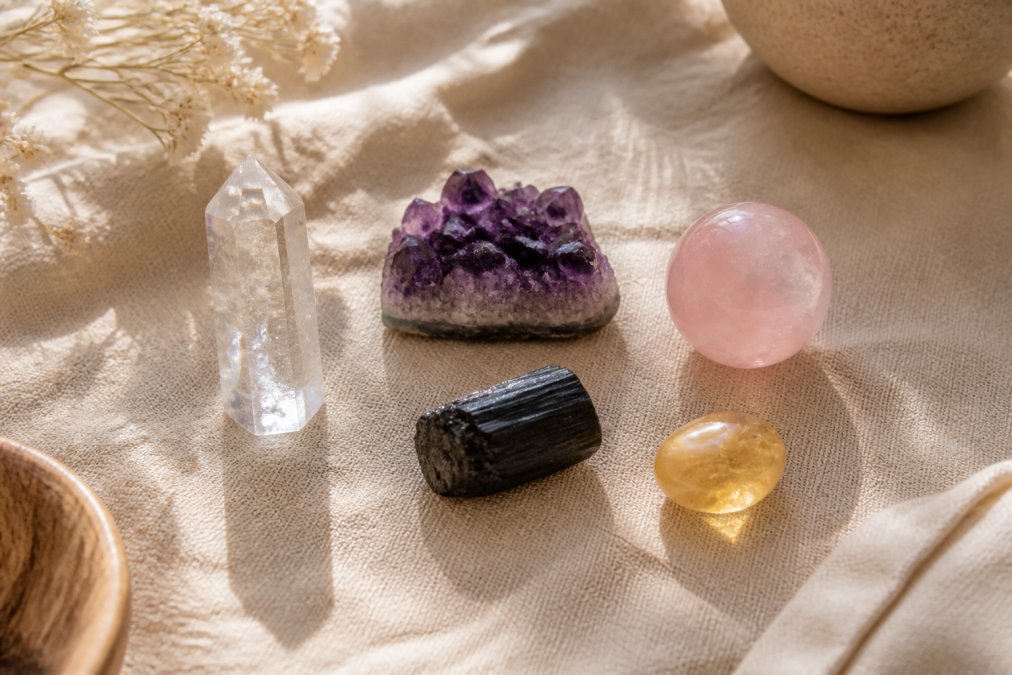
Here are the five best crystals for beginners, selected for their wide range of attributed metaphysical properties and their accessibility:
- Clear Quartz: Called the "master healer" in many traditions. Attributed with amplifying intention and promoting clarity. Works well in any meditation practice.
- Amethyst: Associated with calm, protection, and stress relief. A natural fit for sleep rituals and grounding practices.
- Rose Quartz: Linked to emotional balance, self-compassion, and harmony in relationships. One of the most recommended stones for emotional work.
- Black Tourmaline: Traditionally used for protection and clearing negative energy. Many practitioners keep it near entryways.
- Citrine: Associated with abundance, optimism, and energetic activation. One of the few stones said to not require frequent cleansing.
A Budget-Friendly Starter Kit Approach
You do not need to spend a lot to start. A practical beginner's approach: choose two or three tumbled stones from the list above. Tumbled stones are polished, durable, and typically the most affordable form. Raw specimens and statement pieces come later, once you know which stones resonate with you.
| Crystal | Primary Association | Best Form for Beginners |
|---|---|---|
| Clear Quartz | Clarity, amplification | Tumbled or point |
| Amethyst | Calm, protection | Tumbled or cluster |
| Rose Quartz | Emotional balance | Tumbled or sphere |
| Black Tourmaline | Grounding, protection | Raw or tumbled |
| Citrine | Abundance, energy | Tumbled or natural point |
Visit the CrystalCloud Company collection page for current pricing on starter sets and individual stones.
How to Choose Your First Crystal Intuitively
Forget the algorithm. Intuitive selection is one of the most consistently recommended approaches across crystal healing traditions, and there's a practical reason it works: it gets you out of decision paralysis.
The method is simple. When browsing a collection, notice which stone your eye returns to. Which one do you want to pick up? Which color or shape feels right for where you are right now? That pull is worth paying attention to, not because stones are sentient, but because your instincts often reflect what you actually need.
If you're shopping online, read the attributed properties of several stones and notice which descriptions resonate with your current situation. Someone going through a period of anxiety will likely feel drawn to amethyst or black tourmaline. Someone craving motivation may gravitate toward citrine.
A common mistake is choosing a crystal based entirely on aesthetics and then feeling disconnected from it. Choose based on resonance first, beauty second. The two often align anyway.
What most guides miss: you don't have to believe in energetic resonance for this approach to work. Choosing a stone that reflects an intention you're actively working on creates a psychological anchor. Every time you see or touch it, your attention returns to that intention. That's a real mechanism, not wishful thinking.
How to Cleanse Crystals Before You Use Them
Cleansing is the process of clearing a crystal's accumulated energetic residue before using it for intention work. Whether you understand this literally or symbolically, the ritual serves a real purpose: it marks a beginning. It signals that you're starting fresh.
Common cleansing methods include:
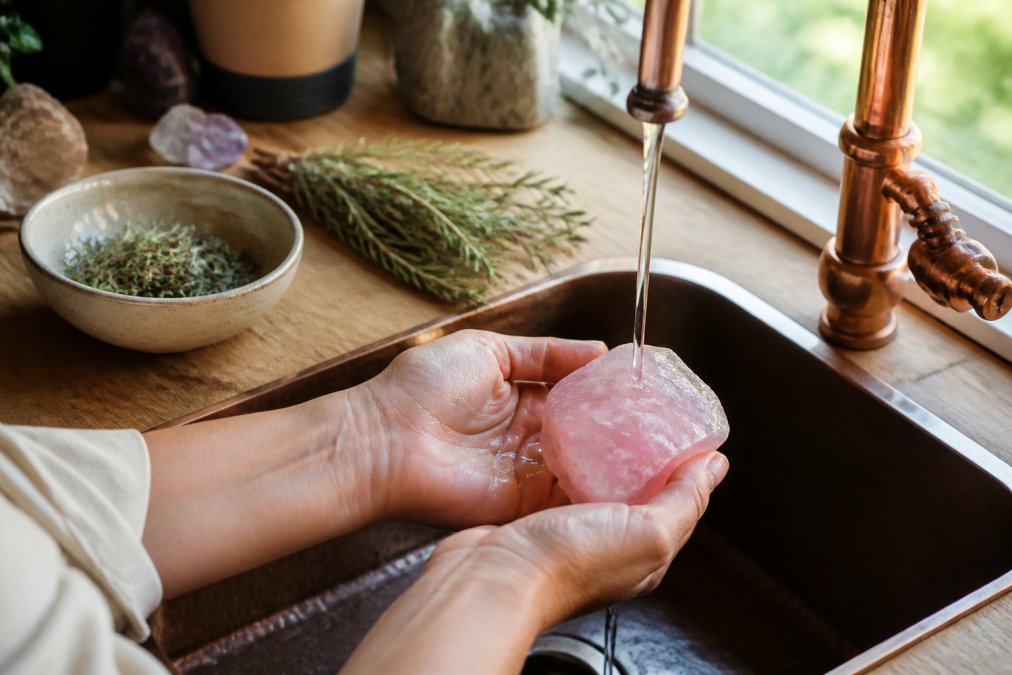
- Running water: Hold the stone under cool running water for 30 to 60 seconds while visualizing any stagnant energy washing away. Note the safety warning below before using this method.
- Moonlight charging: Place stones on a windowsill or outdoors on the night of a full moon. This is one of the most popular cleansing rituals and works safely for all stone types.
- Smoke cleansing: Pass the crystal through the smoke of dried herbs such as cedar, rosemary, or palo santo. This is a stone purification method drawn from multiple indigenous traditions.
- Sound: Use a singing bowl or tuning fork near the crystal. The vibration is said to reset the stone's energetic field.
- Selenite or clear quartz: Place your crystals on or near a selenite slab overnight. These stones are said to cleanse others without needing cleansing themselves.
Crystal Safety and Toxicity: What You Need to Know
This is the section most beginner guides skip entirely. Some crystals are not safe to use in certain ways, and every new collector should know the basics.
Never make crystal-infused water (crystal elixirs) by placing stones directly in drinking water unless you have verified the stone is water-safe. Several commonly sold crystals contain elements that can leach into water, including:
- Malachite: Contains copper compounds
- Pyrite: Contains sulfur and iron, can oxidize in water
- Selenite: Dissolves in water and should never be submerged
- Amazonite: May contain trace amounts of copper
According to the National Institutes of Health's toxicology resources, copper and lead compounds are harmful when ingested even in small amounts. If you want to make a crystal elixir, use the indirect method: place the crystal in a sealed glass container inside the water, so there's no direct contact.
Also: never place crystals in direct sunlight for extended periods without checking their light sensitivity. Amethyst and rose quartz will fade significantly with prolonged UV exposure.
How to Use Healing Crystals in Daily Life
Crystal healing integrates most naturally into routines you already have. The goal isn't to add a complicated new practice. It's to bring intention into moments that might otherwise pass unnoticed.
Setting Intentions and Meditation Practice
Setting intentions with crystals is the foundational practice. Hold your chosen stone in both hands, close your eyes, and state your intention clearly in your mind or aloud. Keep it specific: not "I want to feel better" but "I am releasing the anxiety around this situation."
For a basic crystal meditation practice:
- Sit comfortably with your spine straight.
- Hold your crystal in your non-dominant hand, or place it on the relevant chakra alignment point (amethyst at the crown, rose quartz at the heart).
- Breathe slowly for two to three minutes, focusing your attention on the weight and texture of the stone.
- Visualize your intention as already realized.
- Close by thanking the stone and setting it down with intention.
This practice takes five minutes. Done consistently, it functions as a mindfulness anchor. Research from the American Psychological Association on mindfulness and stress supports the general efficacy of brief, consistent mindfulness rituals for stress relief and emotional regulation.
Crystal Placement in Your Home
Sacred space doesn't require an entire room. A single intentional arrangement on a windowsill or nightstand is enough to create a meaningful focal point.
Placement guidelines by intention:
- Entryway: Black tourmaline or obsidian for protection and clearing negative energy as it enters.
- Bedroom: Amethyst for calm sleep; selenite for clearing the day's energetic residue.
- Workspace: Clear quartz for clarity and focus; citrine for abundance and motivation.
- Living areas: Rose quartz for harmony in shared spaces.
A crystal grid is a more advanced arrangement where multiple stones are placed in a geometric pattern to amplify a shared intention. Beginners can start with a simple three-stone arrangement: one anchor stone in the center and two complementary stones on either side.
For small spaces, the rule is: one stone placed with intention beats ten placed randomly. Prioritize quality over quantity.
Ethical Sourcing: Why It Matters and What to Ask
The crystal industry has a serious supply chain problem. Many stones sold as "natural" have been heat-treated or artificially dyed. Some are mined under conditions that harm workers and ecosystems. Holistic health as a practice sits awkwardly alongside sourcing practices that contradict its values.
What to ask before you buy:
- Where was this stone mined?
- Can the seller provide documentation of origin?
- Has it been heat-treated or artificially enhanced?
- What is the seller's relationship with their suppliers?
Ethical sourcing matters for practical reasons too. Artificially colored or heat-treated stones may look more vivid, but they're not what you're paying for. A genuine amethyst and a heat-treated citrine (which is often just baked amethyst) are very different stones.
The Responsible Jewellery Council's sourcing standards outlines frameworks for ethical mineral sourcing that apply across the gem and crystal industry. Sellers who can speak specifically to their supply chain are worth the premium they often charge.
CrystalCloud Company sources exclusively from verified suppliers and offers documentation on crystal authenticity. Every stone in the collection is tested for genuineness, which directly addresses one of the most common concerns among new buyers: the fear of receiving dyed glass or synthetic material dressed up as the real thing.
Sustainability also extends to packaging and shipping. Conscious consumers should ask whether a seller uses recycled materials and minimal plastic in their fulfillment process.
Crystal healing for total beginners is most rewarding when approached with curiosity rather than certainty. The practice doesn't require belief in metaphysics to offer real value as a mindfulness ritual, an aesthetic anchor, and a daily reminder of your intentions.
Explore the Collection at CrystalCloud Company to find ethically sourced, verified stones curated specifically for beginners, including starter kits chosen with intention and guidance on how to use each stone. Every piece comes with documentation of authenticity, so you know exactly what you're bringing into your space.
Frequently Asked Questions
What crystals should a beginner get first?
Clear quartz, amethyst, and black tourmaline are the most practical starting points for crystal healing beginners. Clear quartz amplifies intention and works across most purposes. Amethyst supports calm and stress relief. Black tourmaline is widely used for grounding and clearing negative energy. Together, these three cover the most common beginner goals, clarity, emotional balance, and protection, without overwhelming you or your space.
Do crystals really have healing properties?
No clinical studies confirm that crystals heal physical conditions. What research does suggest is that mindfulness rituals, including those involving crystals, can reduce stress and support emotional balance, likely through the placebo effect and focused intention setting. Many practitioners find genuine value in crystal healing as a self-care ritual and meditation anchor, even while acknowledging the science is limited. Approaching crystals as tools for mindfulness rather than medicine is the most honest framing.
How do you start practicing crystal healing?
Start with one or two stones that match your current intention, calm, focus, or grounding are good entry points. Cleanse them before first use using moonlight, sound, or dry sage smoke. Hold the stone during a short meditation, state your intention aloud or silently, and place it somewhere you'll see it daily. Consistency matters more than complexity. A five-minute morning ritual with a single crystal builds more energetic resonance over time than an elaborate setup you rarely use.
How do I know if a crystal is genuine and not dyed glass?
Genuine crystals feel cooler to the touch than glass and show natural inclusions, color variations, or slight imperfections. Dyed stones often have unnaturally uniform color concentrated in cracks. Ask your supplier for sourcing documentation and whether stones are heat-treated or artificially colored. Reputable sellers disclose treatments upfront. When in doubt, buy from sources that offer authenticity verification and have a clear return policy if a stone doesn't match its description.
What is the safest way to cleanse crystals at home?
Moonlight charging is the safest universal method, place crystals on a windowsill or outdoors overnight during a full moon. Sound cleansing with a singing bowl or chime works for all stone types. Avoid water cleansing for soft or porous stones like selenite, malachite, or pyrite, which can dissolve or rust. Never use salt water on metal-set pieces. Smoke cleansing with sage or palo santo is effective but keep ventilation open and check local air quality advisories if you have respiratory concerns.
Are any crystals toxic or unsafe to handle?
Yes. Several popular crystals contain toxic minerals. Malachite dust is harmful if inhaled. Cinnabar contains mercury. Amazonite and some garnets contain trace arsenic. The risk from handling polished stones is generally low, but you should always wash your hands after handling raw specimens, never make crystal-infused water from stones you haven't verified as safe, and keep raw mineral specimens away from children and pets.