

Table of Contents
- What Defines High Quality Crystal Jewelry?
- How to Tell if Crystals Are Real Before You Buy
- Why Ethically Sourced Crystal Jewelry Matters
- Raw vs. Polished: Which Style Suits Your Intentions?
- Metal Quality and Allergies: What to Check in the Setting
- A Crystal Jewelry Care Guide for Lasting Energy
- How to Style Crystal Jewelry for Daily Wear
- Find Your Next Piece of High Quality Crystal Jewelry
- Frequently Asked Questions
Last Updated: September 7, 2026
The market for crystal jewelry is crowded with dyed quartz, resin imitations, and mass-produced pendants that arrive looking nothing like their photos. High quality crystal jewelry for sale should feel substantial, catch light through genuine mineral structure, and carry a setting that won't irritate your skin or tarnish. At CrystalCloud Company, we offer a curated selection of ethically sourced, genuine crystals, healing stones, and unique collectibles.
Authenticity is the foundation of any meaningful crystal practice. A genuine stone carries natural inclusions, temperature, and weight, while a glass or resin copy offers only the appearance. Below, we'll show you how to assess stone quality, evaluate ethical sourcing, and choose pieces that align with your intentions and wardrobe, plus the factors most guides miss: metal allergy risks, cleansing routines, and styling approaches.
What Defines High Quality Crystal Jewelry?
High quality crystal jewelry combines three non-negotiable elements: genuine mineral composition, skilled craftsmanship, and thoughtful design that protects the stone during daily wear. A beautiful crystal in a flimsy finding will break within months, while a genuine stone in a poorly designed setting risks scratches, chips, or loss.
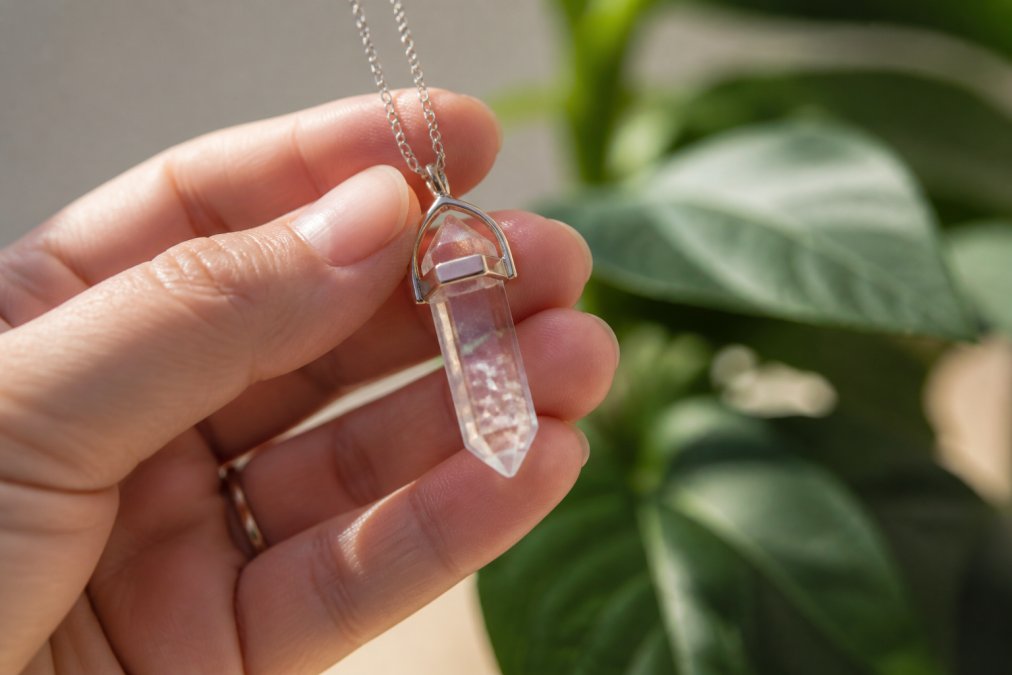
The stone itself should show natural characteristics: slight inclusions, variations in color depth, and a surface that feels cool initially. These markers distinguish authentic stones from glass or resin. Craftsmanship matters equally: prongs should grip the stone securely, and the setting should allow light to pass through rather than blocking it with excessive metal.
How to Tell if Crystals Are Real Before You Buy
Most guides stop at 'look for imperfections' or 'ask for a certificate,' leaving you vulnerable to imitations that mimic natural flaws. To truly verify a crystal, move beyond visual inspection and use basic at-home testing that separates genuine mineral structure from glass, resin, or synthetic material.
The Four-Step At-Home Verification Protocol
1. The Thermal Conductivity Test
Genuine crystals are poor conductors of heat. When held to your lips or the inside of your wrist, a real stone should feel distinctly cool and take several seconds to warm to body temperature; glass and resin reach room temperature almost instantly. This test is not definitive, some minerals like selenite naturally feel warmer, but it is your fastest first filter.
2. The Magnified Inclusion Check
Use a 10x jeweler's loupe (under $15 at most hobby stores) to examine the stone's interior. Real crystals contain natural inclusions: tiny fractures, mineral flecks, or irregular growth lines. Glass imitations often contain perfectly round air bubbles, while lab-grown crystals may show curved growth lines or a uniformity nature rarely produces. If the stone looks too perfect under magnification, that is a red flag.
3. The Hardness Scratch Test (Use with Caution)
Quartz, amethyst, citrine, and most popular crystal jewelry stones rate 7 on the Mohs hardness scale, meaning they should scratch common glass. Press the stone's edge against an inconspicuous spot on an old glass bottle; a genuine quartz crystal will leave a scratch, while glass or resin will not. Important caveat: Do not perform this test on polished, finished pieces, only on raw, unset specimens you already own.
4. The Specific Gravity Test (For Advanced Verification)
For rigorous verification, measure specific gravity, the ratio of a mineral's density to water. Genuine quartz has a specific gravity of 2.65; glass typically falls between 2.4 and 2.5. Weigh the stone dry, then suspended in water using a thin thread, and divide the dry weight by the loss of weight in water. A result close to 2.65 indicates quartz. This method requires practice but is the closest you can get to professional verification without laboratory equipment.
What Professional Certification Actually Means
When a seller offers 'certification,' ask what standard that certification follows. The Gemological Institute of America's identification reports are the industry gold standard, but they are rarely issued for common stones like amethyst or rose quartz because the cost exceeds the stone's value. For high-value pieces, large citrine clusters, paraiba tourmaline, or tanzanite, a GIA report is worth demanding. For everyday crystal jewelry, a seller's detailed sourcing statement (mining region, treatment disclosure, and batch testing records) is often more meaningful than a generic 'certificate of authenticity' that any printer can produce.
The Treatment Disclosure Test
Heat treatment is standard for producing citrine from amethyst, and irradiation is common for certain shades of smoky quartz. These treatments are not inherently deceptive, the problem arises when sellers fail to disclose them. Ask directly: 'Has this stone been heat-treated, irradiated, or dyed?' A reputable seller will answer immediately and specifically; hesitation or a vague 'all our stones are natural' signals that full disclosure would hurt sales.
The Price-to-Reality Check
Real crystal pricing follows predictable patterns based on size, clarity, color saturation, and rarity. If you see the same piece for $15, the stone is likely dyed quartz or glass, and the 'sterling silver' is probably plated. Use the United States Geological Survey's mineral commodity summaries to understand which stones are commercially abundant (and therefore affordable) versus which are genuinely scarce.
Combining these four physical tests with pointed questions about treatment and sourcing moves you from hoping a crystal is real to knowing it is real, the foundation of every other decision you make about your purchase.
Why Ethically Sourced Crystal Jewelry Matters
Ethically sourced crystal jewelry prioritizes transparent supply chains, fair labor practices, and mining operations that minimize environmental damage. Conscious consumption means asking where your stones come from and who handled them.
Many small businesses now document their supply chains from mine to market. Look for sellers who name their mining regions, describe their relationship with miners, and verify that stones aren't mined through exploitative labor practices. This transparency costs more, which explains the higher price points of ethically sourced pieces.
The United States Geological Survey's mineral commodity summaries provide useful background on where various gemstones are commercially mined, helping you understand the geographic claims sellers make about their sourcing.
Raw vs. Polished: Which Style Suits Your Intentions?
Raw crystals retain their natural formation and energy, while polished stones offer smooth surfaces and enhanced durability for daily wear. Raw crystal pendants suit meditation and intention work where the stone's natural state matters; polished stones work better for everyday jewelry because their surfaces resist scratches and catch light more beautifully.
Consider the stone's hardness too. The Mohs scale measures scratch resistance, and softer stones like selenite require gentler care regardless of finish. For active wearers, harder stones like quartz, amethyst, and garnet withstand daily use far better than softer minerals.
Metal Quality and Allergies: What to Check in the Setting
Nickel allergies affect a significant portion of the population, making metal choice in crystal jewelry a health consideration. Sterling silver, gold-filled, and surgical-grade stainless steel are the safest options for sensitive skin; avoid inexpensive plated metals that wear away to reveal nickel-heavy bases.
Check the metal content before purchasing. Sterling silver should be stamped 925, and gold-filled pieces should carry karat markings, these indicate genuine metal content rather than plating. If you have known metal sensitivities, ask the seller directly about nickel content and hypoallergenic options.
A Crystal Jewelry Care Guide for Lasting Energy
Crystal jewelry is a dual investment: a physical object that must withstand daily wear and an energetic tool that requires intentional maintenance. A stone that is physically damaged, scratched, chipped, or clouded by chemical residue, cannot serve its energetic purpose effectively, and a stone that is energetically stagnant often gets retired to a drawer.
Physical Care: Matching Method to Mineral Hardness
The Mohs hardness scale is your primary reference for physical cleaning. Stones rated 7 and above (quartz, amethyst, citrine, garnet, tourmaline) are water-safe and can handle gentle soap-and-water cleaning. Stones rated 6 and below (turquoise, opal, selenite, malachite, moonstone, labradorite) require dry cleaning methods only.
For hard stones (Mohs 7+):
- Mix a few drops of mild, pH-neutral dish soap into lukewarm water
- Dip a soft-bristled baby toothbrush into the solution and gently scrub around the stone and setting
- Rinse under running lukewarm water, never hot, as thermal shock can fracture stones
- Pat dry with a microfiber cloth and allow to air dry completely before storing
For soft or porous stones (Mohs 6 and below):
- Use a dry microfiber cloth to wipe away oils and debris after each wear
- For deeper cleaning, use a soft brush with no water or soap, just gentle mechanical action
- Never submerge these stones. Turquoise is particularly vulnerable: it is porous and can absorb water, which permanently alters its color. Selenite is even more fragile, it is only a 2 on the Mohs scale and can actually dissolve in water over time
The Metal Setting: The Overlooked Care Component
Your sterling silver or gold-filled setting requires its own maintenance routine. Sterling silver tarnishes when exposed to sulfur compounds in the air, sweat, and household chemicals. To slow tarnishing:
- Apply lotions, perfumes, and hairspray before putting on your jewelry, not after
- Remove crystal jewelry before swimming in chlorinated pools or soaking in hot tubs
- Store pieces individually in anti-tarnish cloth pouches or zip-lock bags with a small anti-tarnish strip
- Clean silver settings with a polishing cloth specifically designed for sterling silver, never use liquid silver dips, which can seep into the setting and damage the stone's adhesive or the stone itself
Energetic Cleansing: Methods and Timing
Energetic cleansing is where crystal care becomes personal. The goal is to reset the stone's vibrational frequency after it has absorbed environmental or emotional energy. Different methods work for different people, and there is no single 'correct' approach, what matters is consistency and intention.
Moonlight Cleansing Place your jewelry on a windowsill or outdoor surface during the full moon, traditionally considered the most potent for cleansing and charging. Leave pieces out from moonrise to sunrise. This method is safe for all stones and metals, making it the most universally applicable technique.
Smoke Cleansing Pass your jewelry through the smoke of sage, palo santo, or cedar for 30-60 seconds while setting an intention for cleansing. This method is safe for all stones and metals, but ensure the piece does not get too close to the burning bundle, direct heat can damage settings.
Earth Cleansing Bury your crystal jewelry in a small dish of dry salt or rice for 24 hours. This method is effective for energetic reset but has a critical caveat: never let salt or earth touch porous stones directly, wrap the piece in a soft cloth first. Himalayan salt is particularly popular, though any dry salt works.
Sound Cleansing Use a singing bowl, tuning fork, or bell to bathe the jewelry in sound vibrations, holding the piece within a few inches of the source for 1-2 minutes. This method is completely safe for all materials and is particularly useful for delicate pieces that should not be exposed to water or smoke.
How Often Should You Cleanse?
There is no universal schedule, but a common pattern among practitioners is:
- Daily wear pieces: cleanse weekly
- Meditation or healing pieces: cleanse after each use
- Occasional wear pieces: cleanse monthly or when you notice the stone feels 'heavy' or less responsive
Storage: The Final Care Step
How you store your crystal jewelry between wears matters as much as how you clean it. Store pieces separately to prevent scratching and tangling, using a lined jewelry box with individual compartments or small cloth pouches. Keep storage away from direct sunlight, which can fade stones like amethyst and rose quartz over time; a cool, dark, dry place is ideal.
By treating your crystal jewelry with this level of care, you extend both its physical lifespan and its energetic vitality. A well-cared-for piece can last decades, becoming more meaningful with each year of use.
How to Style Crystal Jewelry for Daily Wear
Crystal jewelry transitions from meditation tool to everyday accessory when styled thoughtfully. Layering pendant necklaces at varying lengths creates visual interest without overwhelming your outfit. A single statement piece works best with busy patterns, while multiple delicate pieces suit minimalist clothing.
Consider the stone's color in relation to your wardrobe. Rose quartz complements neutrals and soft pinks, while black tourmaline grounds brighter outfits. Natural leather cords offer a casual aesthetic, while sterling silver chains dress up the same stone for professional settings, one piece can serve multiple purposes across your week.
Find Your Next Piece of High Quality Crystal Jewelry
Choosing high quality crystal jewelry for sale ultimately comes down to verification: genuine stones, ethical sourcing, and quality metals that protect both your skin and the mineral's integrity. When sellers provide documentation, disclose treatments, and stand behind their products, the buying decision becomes simpler.
| What to Check | Why It Matters | Red Flag to Avoid |
|---|---|---|
| Stone authenticity | Genuine minerals carry energetic and physical properties | Uniform color, air bubbles, suspiciously low prices |
| Ethical sourcing | Transparent supply chains protect miners and environments | Vague origin claims, no documentation |
| Metal quality | Prevents allergic reactions and early tarnishing | Unmarked plated metals |
| Treatment disclosure | Heat and dye treatments change stone properties | Evasive answers about processing |
CrystalCloud Company curates every piece with these standards in mind, offering ethically sourced and verified crystals with expert guidance on rituals and pairing. Our collection spans raw specimens, polished statement pieces, and jewelry designed to support your intentions. Explore the collection and find a piece that resonates with your energy.
Frequently Asked Questions
How can you tell if crystal jewelry is real?
Real crystals usually feel cool to the touch and warm up slowly in your hand. Look for natural imperfections, irregular color zoning, and small inclusions rather than perfect uniformity. Glass imitations often have bubbles or perfectly smooth surfaces. Check the stone's hardness: quartz will scratch glass but not steel. Reputable sellers provide certification or detailed sourcing information, so ask for documentation before you buy.
Is crystal jewelry worth the investment?
High quality crystal jewelry combines genuine stones with durable metals like gold-filled or sterling silver, so it holds up to daily wear. The value comes from three factors: stone authenticity, ethical sourcing practices, and craftsmanship in the setting. A well-made piece lasts years and keeps its appearance. Cheaper alternatives often use dyed glass or plated metals that tarnish and chip quickly.
How do I care for my crystal jewelry to maintain its energy?
Clean your crystal jewelry weekly with a soft, dry cloth to remove oils and dirt. Avoid submerging pieces in water, since some stones are porous or water-sensitive, and never use harsh chemicals or ultrasonic cleaners. Store pieces separately to prevent scratching. For energetic cleansing, place the jewelry on a selenite plate or in moonlight overnight, then set your intention by holding it and focusing on your goal.
What should I look for when buying high quality crystal jewelry?
Check three things: the stone, the metal, and the seller. The crystal should show natural characteristics like inclusions or color variation, and the metal should be hypoallergenic options like gold-filled or sterling silver. Look for sellers who disclose sourcing locations and testing methods. Read reviews about durability and authenticity. A reputable shop will answer questions about where stones come from and how they verify genuineness.
Finding genuine, ethically made crystal jewelry takes patience, but the result is a piece that serves you for years. CrystalCloud Company removes the guesswork through rigorous testing, certification for authenticity, and sourcing documentation you can trust. Start with a piece that speaks to your current intentions, and let it become part of your daily practice.