

Table of Contents
- What to Know Before You Buy Natural Healing Crystals Online
- How to Identify Real Crystals Before You Purchase
- Ethically Sourced Crystals Online: Why It Matters and What to Ask
- Healing Crystals for Beginners: Building Your First Collection
- Shop by Category: Crystal Types and Their Healing Properties
- Crystal Jewelry, Decor, and Rare Specimens Worth Collecting
- CrystalCloud Company: A Closer Look at What Sets It Apart
- Conclusion
Last Updated: August 26, 2026
Most people who lose money buying crystals online don't fail from carelessness, they lack knowledge of what to look for before clicking "add to cart." The market for healing crystals has grown considerably, flooding it with dyed glass, heat-treated stones, and synthetic imitations sold as genuine. This guide cuts through the noise with exactly how to verify authenticity, what ethical sourcing looks like in practice, how to build a beginner collection with intention, and why not all crystal shops are equal.
The single most important thing: buying healing crystals online is not inherently risky, but it requires baseline knowledge most sellers never provide.
What to Know Before You Buy Natural Healing Crystals Online
Buying natural healing crystals online starts with understanding that the market has no universal certification standard. Unlike diamonds with grading reports from institutions like the Gemological Institute of America, most crystals change hands without formal documentation. That doesn't mean authenticity is impossible to verify, it means the burden falls on the buyer to ask the right questions and recognize the right signals.
Red Flags That Signal a Fake or Low-Quality Stone
The most common deceptions in the crystal market are predictable once you know what to look for.
- Unnaturally vivid color: Genuine amethyst, citrine, and agate rarely display electric, saturated hues on low-cost listings. Dyed stones often bleed color when soaked in water or rubbed with a damp cloth.
- Perfectly uniform specimens: Natural formations are asymmetrical. If every piece in a batch looks identical, they were likely mass-produced or synthetic.
- Vague origin labeling: Legitimate sellers name the mine or region of origin. "Natural crystal from nature" tells you nothing.
- Prices far below market rate: High-quality amethyst geodes take time to source, cut, and ship. Suspiciously low pricing usually reflects quality.
- No return or authenticity policy: Reputable sellers stand behind their stones. Sellers moving synthetic material often make returns deliberately difficult.
Scientific Verification: What Testing Actually Proves
A gemologist can confirm stone identity using refractive index testing, specific gravity measurement, and spectroscopy. Hardness testing on the Mohs scale is a simpler field method: genuine quartz registers at 7, scratching glass but not corundum. Calcite sits at 3 and scratches with a copper coin.
Testing cannot prove whether a stone has been heat-treated to alter color. Natural citrine forms through geological processes; most commercial "citrine" is heat-treated amethyst. The two are chemically identical but visually distinct. Natural citrine tends toward pale yellow or smoky hues, while heat-treated material often shows reddish-orange tint at the base.
Ask sellers directly: has this stone been heat-treated or artificially colored? Confident sourcing means answering without hesitation.
How to Identify Real Crystals Before You Purchase
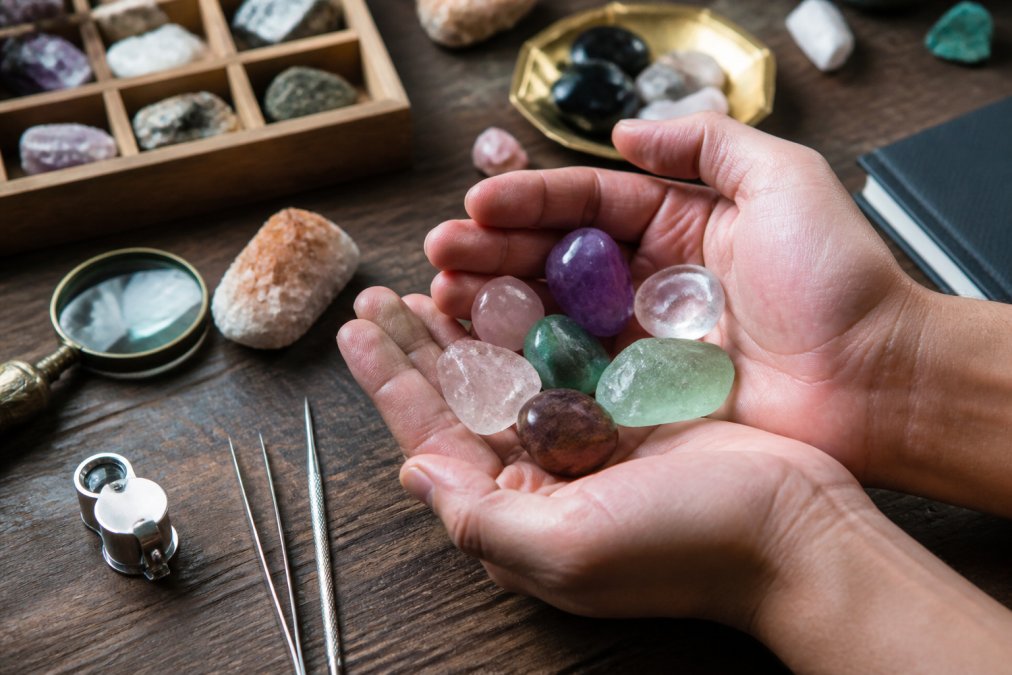
Genuine crystals feel cold to the touch initially because stone conducts heat away from your hand faster than glass or plastic. Real polished stones also feel heavier than their size suggests, since authentic minerals have higher density than synthetic alternatives.
Physical Tests You Can Do at Home
Once your order arrives, these tests provide a reasonable baseline for authenticity:
- Temperature test: Hold the stone for 30 seconds. Genuine crystal warms slowly; glass and plastic warm almost immediately.
- Weight test: Compare the stone's weight to glass of similar size. Authentic minerals are noticeably denser.
- Scratch test: Use a steel knife to scratch an inconspicuous area. Genuine quartz-family stones scratch steel; glass does not.
- Bubble inspection: Hold the stone to light. Natural crystal contains inclusions, fractures, or cloudiness. Perfectly clear material with no internal features is almost certainly glass.
Crystal Safety and Toxicity: What Buyers Rarely Hear
Several popular crystals contain hazardous minerals when handled improperly. Malachite contains copper and should never be used for crystal-infused drinking water. Cinnabar contains mercury and should be handled with care, kept from children, and never ground or abraded. Galena is lead sulfide requiring hand-washing after handling. Amazonite contains trace copper. Actinolite, sometimes sold as "green quartz," can contain asbestos fibers.
According to the U.S. National Library of Medicine's toxicology resources, heavy metal exposure through skin contact is generally low-risk for intact, polished specimens, but ingestion or inhalation risk increases significantly with powdered or abraded material.
When purchasing minerals for crystal grids or meditation, verify the mineral composition. Any reputable seller should provide the chemical formula of what they're selling.
Ethically Sourced Crystals Online: Why It Matters and What to Ask
Ethically sourced crystals represent a genuine supply chain distinction with real consequences for mining communities and ecosystems. The crystal industry sources material from Madagascar, Brazil, the Democratic Republic of Congo, Afghanistan, and dozens of other countries. Labor conditions, environmental protections, and fair pay vary enormously across regions.
A seller claiming ethical sourcing without documentation makes an unverifiable assertion. Meaningful ethical sourcing means knowing which mine the stone came from, who extracted it, under what conditions, and whether workers received fair wages.
Sustainability Impact: Questions Every Buyer Should Ask
Before purchasing from any online crystal shop, ask these specific questions:
- Where was this stone mined? A country alone is insufficient. Region and mine name demonstrate real traceability.
- Who is your direct supplier? Sellers buying from wholesalers three steps removed from the mine cannot verify source conditions.
- Do you have documentation? Fair trade certifications, supplier contracts, or third-party audits are meaningful.
- What is your environmental policy? Open-pit mining causes significant land disruption. Sellers partnering with operations practicing land reclamation demonstrate higher standards.
- How do you handle returns? Clear return processes reflect confidence in sourcing and quality.
As documented in the Responsible Jewellery Council's sourcing standards, traceability in the mineral supply chain requires documented chain of custody from extraction to sale.
Healing Crystals for Beginners: Building Your First Collection
Healing crystals for beginners work best when chosen with specific intention rather than assembled at random. A collection of five stones chosen for clarity, grounding, protection, sleep, and emotional balance gets handled daily.
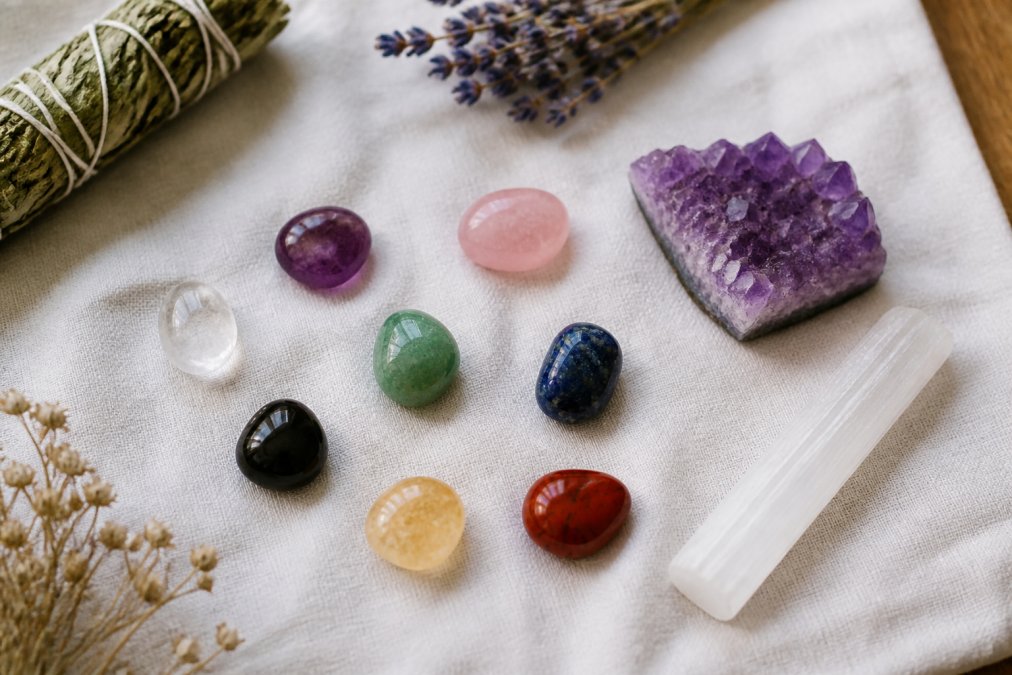
Starter Stones by Intention
| Intention | Stone | Form | Why It Works for Beginners |
|---|---|---|---|
| Clarity and focus | Clear quartz | Tumbled or point | Versatile, widely available, easy to verify |
| Emotional balance | Rose quartz | Tumbled | Gentle energy, recognizable, hard to fake |
| Grounding | Black tourmaline | Raw or tumbled | Distinctive appearance, straightforward sourcing |
| Sleep and calm | Amethyst | Cluster or tumbled | Beautiful, beginner-friendly, widely documented |
| Protection | Obsidian | Tumbled or sphere | Volcanic glass, easy to authenticate |
| Energy cleansing | Selenite | Wand or plate | Soft, distinctive, dissolves in water (do not wet) |
How to Cleanse and Charge Your Crystals
Crystal cleansing clears accumulated energy from a stone before use or after extended handling. Crystal charging sets or amplifies the stone's vibrational frequency through intentional exposure to natural elements.
Common cleansing methods include:
- Moonlight: Place stones on a windowsill or outside during a full moon overnight. Safe for all stone types.
- Smoke: Pass the stone through smoke of dried sage, palo santo, or cedar. Safe for all stone types.
- Sound: Use a singing bowl or tuning fork near the stone. Safe for all stone types and particularly effective for crystal grids.
- Selenite plate: Rest stones on a selenite charging plate for several hours. Selenite is widely regarded as self-cleansing.
Avoid water cleansing for selenite (dissolves), malachite (copper leaches), halite (dissolves), and stones with Mohs hardness below 5. Avoid sunlight for amethyst, rose quartz, and fluorite (they fade and crack under heat).
Shop by Category: Crystal Types and Their Healing Properties
The crystal market organizes around several broad categories, each with distinct metaphysical uses and physical characteristics.
Quartz family: Clear quartz, amethyst, rose quartz, smoky quartz, and citrine share the same silicon dioxide base, making them among the easiest to authenticate. These form the foundation of most crystal grids.
Protective stones: Black tourmaline, obsidian, shungite, and labradorite are commonly used for energetic protection and grounding. Labradorite's iridescent flash is a reliable authenticity marker. Shungite comes from a single Russian region; geographic origin is a key authenticity signal.
Heart and emotional stones: Rose quartz, rhodonite, malachite, and green aventurine are associated with emotional healing and chakra balancing. Malachite's distinctive banded patterns are difficult to fake convincingly.
Mineral specimens: Celestite geodes, fluorite clusters, pyrite formations, and selenite towers appeal to collectors. These pieces require stronger gemstone identification skills.
Zodiac birthstones and intention sets: Many buyers organize collections around zodiac associations or specific intentions. Curated sets offer practical entry points for beginners.
According to the Mineralogical Society of America's educational resources, understanding basic crystal structure and formation helps buyers recognize natural formations versus synthetic or treated material.
Crystal Jewelry, Decor, and Rare Specimens Worth Collecting
Crystal jewelry keeps a stone in contact with the body throughout the day, which practitioners associate with sustained energetic influence. For crystal jewelry, verify whether stones are genuine gemstones or simulants. Many pieces sold as "amethyst" or "labradorite" use dyed glass or synthetic material.
Crystal decor, including selenite towers, amethyst geodes, fluorite clusters, and large polished spheres, functions as both aesthetic and spiritual pieces. Rare specimens, including large natural formations and unique pieces like rainbow aqua aura quartz clusters, appeal to serious collectors.
Rare specimens require provenance documentation. A large, high-quality piece without origin documentation is worth significantly less than an identical piece with clear chain of custody.
CrystalCloud Company: A Closer Look at What Sets It Apart
CrystalCloud Company is a small business based in Virginia taking a curated approach to the crystal market rather than volume-based. Where large retailers move thousands of units sourced through wholesale intermediaries, CrystalCloud Company builds its collection around verified, ethically sourced stones selected with intention.
The collection spans raw natural specimens, polished statement pieces, crystal jewelry, and unique collectibles including rare crystal demon figures. Beginner-friendly starter kits make the collection accessible to new buyers. For seasoned collectors, rare specimens and hand-selected pieces offer the specificity mass-market retailers cannot replicate.
What separates CrystalCloud Company:
- Authenticity through rigorous testing and certification: Stones are verified before entering the collection.
- Curated collections based on intention: Selection reflects what stones do, not just appearance.
- Expert guidance on crystal rituals and pairing: Buyers receive context for how to use purchases.
- Ethical sourcing from trusted sources: Supply chain is a collection feature.
For buyers wanting quality, authenticity, and intention behind every stone, CrystalCloud Company is a choice in its category.
Explore the Collection at crystalcloudcompany.com.
| What to Look For | Why It Matters | CrystalCloud Company's Approach |
|---|---|---|
| Authenticity verification | Prevents buying dyed glass or synthetics | Rigorous testing and certification |
| Ethical sourcing documentation | Ensures fair labor and environmental standards | Verified, trusted suppliers |
| Beginner guidance | Reduces overwhelm for new buyers | Curated starter kits with intention |
| Rare and unique specimens | Serves serious collectors | Hand-selected rare pieces including unique collectibles |
| Return policy clarity | Protects buyer confidence | Small-business accountability |
The biggest challenge when buying natural healing crystals online isn't finding options, it's finding options you can trust. CrystalCloud Company addresses that directly through verified sourcing, authenticated stones, and a collection built with genuine intention rather than volume. Whether assembling your first beginner kit or adding a rare specimen to an established collection, the guidance and quality are there. Explore the Collection and find the stones that resonate with your space and energy.
Frequently Asked Questions
Q: How can I tell if a healing crystal I bought online is real or fake?
A: Genuine crystals have natural imperfections: slight color variations, inclusions, and irregular formations. Fakes made from dyed glass feel lighter, show uniform color, and often have air bubbles visible under magnification. Ask sellers for gemologist certification or lab testing documentation before purchasing healing crystals online. When your stone arrives, check hardness with a simple scratch test, most genuine crystals scratch glass easily. Unusually vivid, perfectly uniform color is a reliable warning sign of dye treatment or synthetic origin.
Q: What are the most popular healing crystals for beginners?
A: Clear quartz, amethyst, black tourmaline, rose quartz, and selenite are consistently recommended starting points. Clear quartz is valued for amplifying intention and energy work. Amethyst supports meditation and calm. Black tourmaline is used for energetic protection. Rose quartz is associated with compassion and emotional balance. Selenite is popular for crystal cleansing and charging other stones. Many shops offer curated starter kits that bundle these together, which is a practical way for beginners to build a foundational collection without guesswork.
Q: How are ethically sourced crystals different from mass-produced ones?
A: Ethically sourced crystals come from mines and suppliers that meet fair labor standards, pay workers fairly, and minimize environmental damage. Mass-produced crystals are often extracted under unregulated conditions with little transparency about origin. When you buy ethically sourced crystals online, look for sellers who name their mining regions, describe their supply chain, and can provide documentation. Vague phrases like 'sustainably sourced' without specifics are a sign the seller cannot verify their claims. Genuine transparency includes country of origin and supplier relationships.
Q: Is it safe to handle all types of healing crystals?
A: Most polished stones are safe to handle, but some minerals contain toxic compounds. Malachite contains copper and should not be used to make crystal-infused water. Cinnabar contains mercury and requires careful handling. Pyrite and certain sulfide minerals can release harmful dust if broken or carved. Always research any unfamiliar mineral before extended skin contact or placing it near food or water. Reputable sellers include safety notes for stones with known toxicity concerns, which is a mark of responsible crystal education.
Q: What should I look for when buying crystals for meditation and energy work?
A: Prioritize authentic, hand-selected stones over bulk-packaged inventory. For meditation and energy work, the physical quality of the stone matters: look for natural formations, clear origin information, and no signs of heat treatment or artificial coloring. High-vibration stones like selenite, moldavite, and high-grade amethyst are often sought for chakra balancing and intention setting. Buying from sellers who provide crystal care guidance and pair recommendations based on your intention gives you a more informed, purposeful starting point than browsing generic product listings.